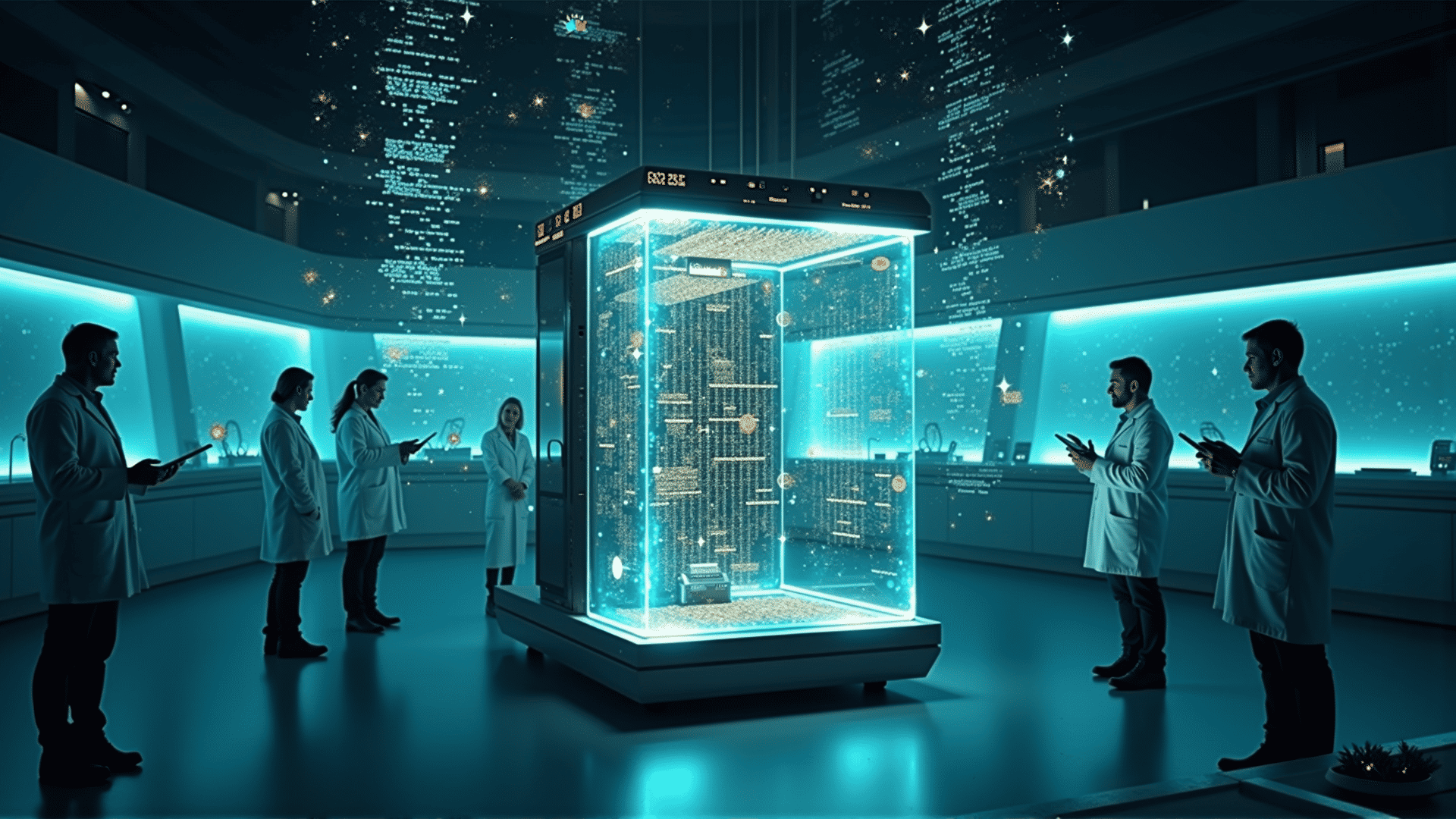
In recent years, the concept of quantum computing has captivated the imagination of scientists, technologists, and entrepreneurs alike. This emergent technology is poised to eclipse the capabilities of classical computers, potentially revolutionizing a wide array of industries with its immense processing power. At its core, quantum computing leverages the strange and fascinating principles of quantum mechanics to perform complex computations far beyond the reach of even the most advanced classical computers.
Quantum computing differs fundamentally from conventional computing in how it processes information. Instead of using bits as the basic unit of data, which can exist as either 0 or 1, quantum computers utilize quantum bits, or qubits. Thanks to the principles of superposition and entanglement, a qubit can exist simultaneously in multiple states, allowing quantum computers to process a vast number of possibilities concurrently.
One of the most promising aspects of quantum computing is its potential to solve intricate problems in a fraction of the time it would take classical computers. Problems that are currently intractable due to their complexity may become solvable with the advent of quantum computing, opening new horizons across various sectors.
In the realm of pharmaceuticals, quantum computing could revolutionize drug discovery processes. By simulating molecular interactions at an unprecedented scale, quantum computers could expedite the identification of viable drug candidates, drastically reducing the time and cost required to bring new medications to market. This potential could lead to breakthroughs in treatment for diseases that have long eluded effective therapies.
The impact of quantum computing on cryptography—a cornerstone of digital security—is another area of intense focus. Classical cryptographic techniques, which protect data through complex mathematical problems, rely heavily on the assumption that these problems are too time-consuming for conventional computers to solve. However, quantum computers could theoretically crack widely-used cryptographic codes, necessitating the development of quantum-resistant algorithms to secure sensitive information.
In the financial sector, the processing power of quantum computers holds promise for optimizing investment portfolios and enhancing risk assessment capabilities. By analyzing vast datasets with unparalleled efficiency, quantum computing could lead to more accurate predictive models and better decision-making, potentially transforming financial markets.
Quantum computing also has significant implications for artificial intelligence (AI) and machine learning (ML). The ability to rapidly process and analyze large datasets could accelerate the development of sophisticated AI models and improve their learning capabilities. This synergy could lead to advancements in fields as diverse as autonomous vehicles, natural language processing, and predictive analytics.
Despite its enormous potential, the field of quantum computing is still in its nascent stages. Significant challenges remain, such as achieving stable qubit states and reducing error rates in quantum operations. However, researchers and tech giants are racing to overcome these hurdles, investing heavily in building scalable and reliable quantum systems.
As we stand on the cusp of this technological revolution, it is essential for industries and the global workforce to prepare for the shifts that quantum computing will inevitably bring. Education and training will play crucial roles in ensuring that the benefits of this technology are accessible and equitable across society.
In conclusion, quantum computing promises to unlock a new era of technological advancement with its unparalleled processing power. While still in development, its potential to revolutionize industries such as pharmaceuticals, finance, cryptography, and artificial intelligence is undeniable. As research continues to progress, the world eagerly anticipates the profound changes that quantum computing will usher in, forever altering the landscape of technology and industry.